





Whenever you press the brake pedal, the calipers clamp the brake pads against the rotor discs, generating friction to stop your car. The friction layer of each brake pad (formed from an organic, ceramic, or semi-metallic compound of materials) slowly wears down over time. Once a pad is almost finished, you’ll notice the following signs that it’s time for a brake pad replacement at your local Chevy dealership.
How to Know Your Chevy Needs a Brake Pad Replacement
Brake Pad Indicator Light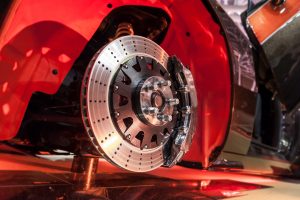
These days, many modern Chevy cars have a handy brake pad indicator light, which appears on the instrument panel when a pad is almost worn through. It’s best not to ignore this warning light as a worn-out pad could soon begin to damage the rotor disc and lessen your vehicle’s stopping power.
Visibly Worn-Out Pads
You can peer through the spokes of a wheel to visually inspect a brake pad. If the friction layer facing the rotor has worn down to a quarter of an inch or less in-depth, it’s probably time for a new pad. You might also notice a buildup of brake dust when a pad’s on its last legs.
Squeaking Brakes
Brake pads are usually designed to emit a loud squeaking or screeching noise when they’re almost finished. This sound is created by a little metal tab uncovered in the friction layer. The noise is no cause for alarm; it just means you need to install a new pad soon.
Grinding Brakes
When the friction layer of a brake pad has worn away altogether, only the steel casing is left to scrape directly against the rotor. This generates an unpleasant grinding noise and should be resolved at once before the rotor becomes damaged.
Longer Stopping Distances
Worn-out pads can lose their ability to generate full friction when clamping against the rotors. If this occurs, you might experience weakened brakes, which is hazardous on the road. Overheating brake pads can sometimes melt, which also lessens the stopping force and necessitates new pads.
Pulling to One Side
Problems with a brake pad could reduce stopping power on just one side of your car. This would result in your vehicle tugging gently to the left or the right when you apply the brakes.
Book Biannual Brake Inspections at Your Chevy Dealership
Brake pads can last anywhere from 25,000 to 65,000 miles, depending on driving habits and conditions. One way to know how rapidly your pads are wearing down is to have your brakes periodically inspected by a professional. Our technicians can make sure that all your brake components are in good shape and also tell you when you’re next likely to need new pads.
A proactive approach is the safest way to maintain your brakes. Visit Alan Webb Chevrolet in Vancouver, WA, for routine inspections or as soon as you detect one of the aforementioned signs of worn-out brake pads.
Connect with us


- May 2026
- April 2026
- March 2026
- January 2026
- December 2025
- November 2025
- October 2025
- September 2025
- August 2025
- July 2025
- June 2025
- May 2025
- April 2025
- March 2025
- February 2025
- January 2025
- December 2024
- November 2024
- October 2024
- September 2024
- August 2024
- July 2024
- June 2024
- May 2024
- April 2024
- March 2024
- February 2024
- January 2024
Archives
- 2024 Chevy Blazer EV Vancouver, WA
- 2024 Chevy Blazer Vancouver, WA
- 2024 Chevy Camaro Vancouver, WA
- 2024 Chevy Colorado Vancouver, WA
- 2024 Chevy Corvette Stingray Vancouver, WA
- 2024 Chevy Equinox Vancouver, WA
- 2024 Chevy Malibu Vancouver, WA
- 2024 Chevy Model Lineup
- 2024 Chevy Silverado 1500 Vancouver, WA
- 2024 Chevy Silverado 2500 HD, Vancouver, WA
- 2024 Chevy Silverado 3500 HD Vancouver, WA
- 2024 Chevy Silverado HD
- 2024 Chevy Suburban Vancouver, WA
- 2024 Chevy Tahoe Vancouver, WA
- 2024 Chevy Trailblazer Vancouver, WA
- 2024 Chevy Traverse Vancouve, WA
- 2024 Chevy Traverse Vancouver, WA
- 2024 Chevy Trax Vancouver, WA
- 2025 Chevy Blazer EV Vancouver, WA
- 2025 Chevy Blazer Vancouver, WA
- 2025 Chevy Colorado Vancouver, WA
- 2025 Chevy Equinox EV Vancouver, WA
- 2025 Chevy Equinox Vancouver, WA
- 2025 Chevy Equinox Vancouver, WA
- 2025 Chevy Lineup
- 2025 Chevy Malibu Vancouver, WA
- 2025 Chevy Silverado 1500 Vancouver, WA
- 2025 Chevy Silverado 2500 HD
- 2025 Chevy Silverado 3500 HD Vancouver, WA
- 2025 Chevy Silverado EV Vancouver, WA
- 2025 Chevy Suburban
- 2025 Chevy Tahoe Vancouver, WA
- 2025 Chevy Traverse Vancouver, WA
- 2025 Chevy Trax Vancouver, WA
- 2026 Chevrolet Suburban
- 2026 Chevrolet Trax
- 2026 Chevy Equinox
- 2026 Chevy Equinox EV Vancouver, WA
- 2026 Chevy Lineup
- 2026 Chevy silverado 1500 Vancouver, WA
- 2026 Chevy Tahoe
- 2026 colorado
- Alan Webb Chevrolet
- Alan Webb Chevrolet Service
- Apply for Financing
- Battery Care
- Brake Repair Vancouver, WA
- Car Loans
- Chevrolet Safety Features
- Chevrolet SUVs
- Chevrolet Trucks Vancouver, WA
- Chevy Car Financing
- Chevy EV Lineup
- Chevy Safety Features
- Chevy Silverado 2500 HD Features & Performance
- Headlight Replacement Vancouver, WA
- Oil Change Service Vancouver, WA
- Tire Service
- Towing Capacity
- Uncategorized
- Vancouver Chevrolet Dealer
- Vancouver Chevrolet Service
- Vancouver Used Cars